An Overview of Golden Gate Park and Its History
Golden Gate Park stands as one of San Francisco’s most iconic urban landscapes, a testament to human ingenuity, environmental transformation, and community significance. Spanning over 1,000 acres from Stanyan Street on the east to the Pacific Ocean on the west, this world-renowned public space blends natural beauty, cultural institutions, recreational areas, and a rich history that mirrors the growth and evolution of the city itself.
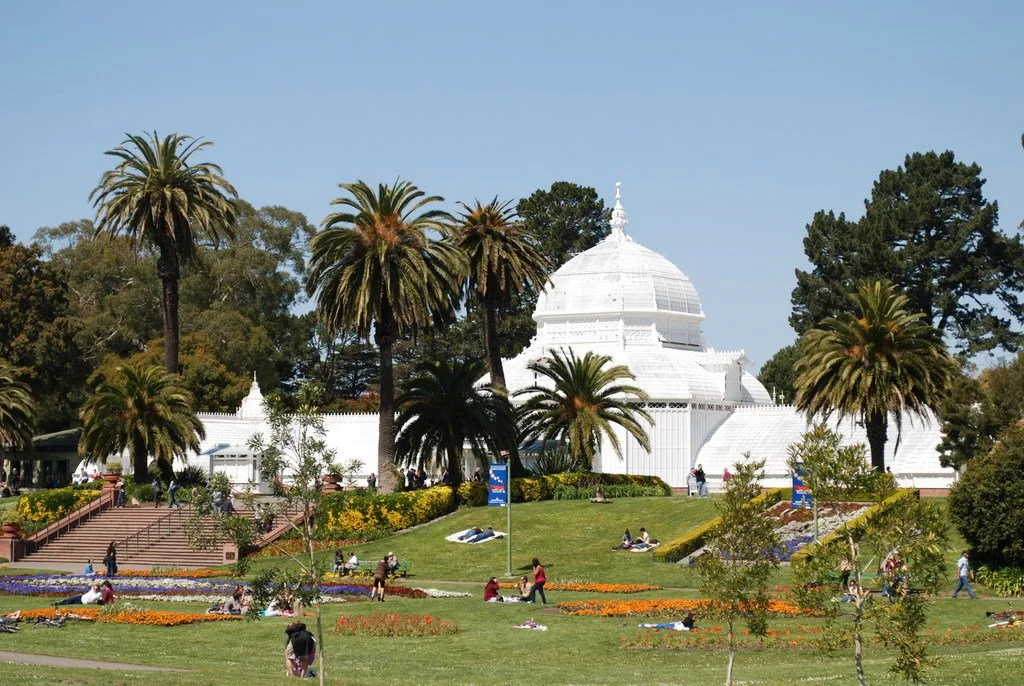
Image Credit: Jrozwado, CC BY-SA 4.0, via Wikimedia Commons
The Origins: From Sand Dunes to Urban Oasis
The land that would become Golden Gate Park was once part of the “Outside Lands,” a sweeping area of windswept sand dunes largely seen as barren and inhospitable in the mid-19th century. Before development, early maps labeled this expanse the “Great Sand Bank,” highlighting its rolling dunes that offered little vegetation or shade.
In the late 1860s, San Francisco city leaders began envisioning a monumental public park in the style of New York City’s Central Park. Landscape architect Frederick Law Olmsted—the mind behind Central Park—was consulted but advised against a park in the sand dunes due to the challenging terrain. Nonetheless, San Francisco persisted and commissioned surveyor William Hammond Hall as the first Superintendent and chief designer in 1870. Hall accepted the challenge of stabilizing the sandy soil and transforming it into a verdant refuge.
Hall’s strategy involved planting quick-growing grasses and trees that would bind the shifting sands and create topsoil capable of supporting more substantial vegetation. By following the natural contours of the dunes and using them as windbreaks, Hall implemented a landscape design that worked with the land rather than against it—an early example of ecological landscape engineering. By 1890, only two decades after its inception, much of the park’s eastern section had begun to mature into a lush environment of pathways, gardens, and groves.
Growth and Development Through the Years
Golden Gate Park officially opened in 1870, and its early years were devoted to planting and developing infrastructure. Trees, grasslands, and ornate gardens gradually replaced the once barren dunes, and pathways, lakes, and recreational areas were added to accommodate visitors. The park’s size today encompasses approximately 1,017 acres, making it one of the largest urban parks in the United States.
The park played a particularly significant role following the devastating 1906 San Francisco earthquake and fire. In the aftermath of the disaster, the park became a sanctuary in which more than 200,000 displaced residents set up temporary shelters amidst its groves and open lawns. This period embedded Golden Gate Park into the collective memory of San Franciscans as not only a place of leisure but also a refuge in times of need.
Throughout the early 20th century, architectural and cultural landmarks were added to the park. The Conservatory of Flowers, completed in the late 1870s, stands as one of the oldest buildings in the park and showcases an exceptional collection of rare and exotic plants.

Cultural Landmarks and Recreational Attractions
Golden Gate Park is much more than a green space; it is a cultural hub that hosts museums, gardens, lakes, windmills, and social gathering sites. Notable attractions include:
The de Young Museum and California Academy of Sciences, major cultural institutions that offer art, science, and natural history exhibits.
The Conservatory of Flowers, a historic greenhouse and botanical collection that remains one of the park’s most beloved features.
The Dutch and Murphy Windmills, built in the early 1900s to pump water for park irrigation, symbolize early engineering efforts that helped sustain the park’s plantings.
Hippie Hill, a historic social gathering spot off Kezar Drive, known for its role in counterculture movements and as a space for artistic expression and community.
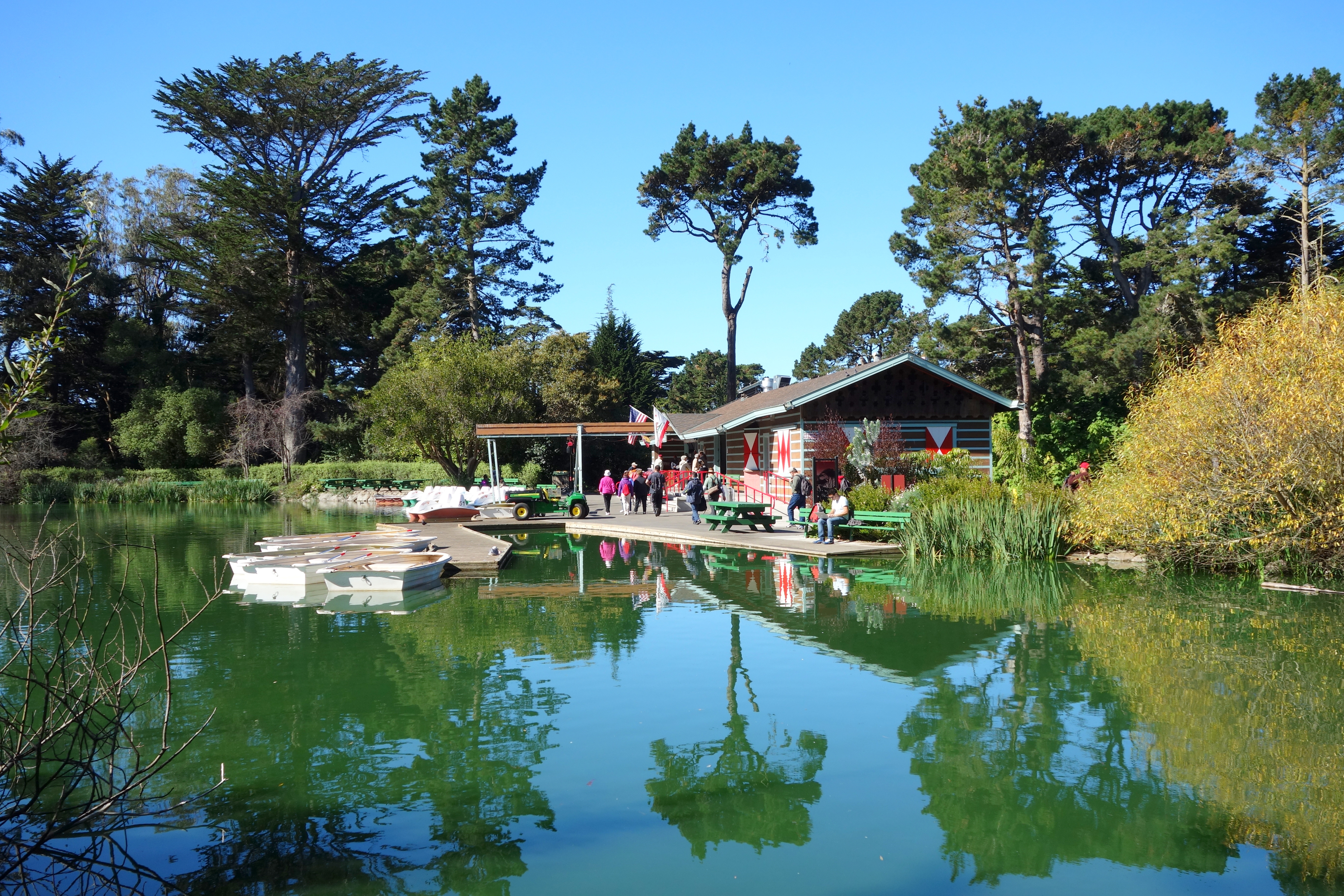
The park’s design also incorporates serene bodies of water, such as Stow Lake (recently renamed Blue Heron Lake), which has been a favorite for boating and wildlife watching since its completion in the 1890s.
Events and Modern Use
Today, Golden Gate Park is one of the most visited urban parks in the United States, attracting millions of visitors annually. It is not only a place for quiet reflection and strolls, but also a venue for concerts, festivals, athletic pursuits like cycling and boating, and immersive community events. Annual celebrations and creative installations continue to animate the park’s open spaces, keeping it dynamic and relevant to each generation.
The park’s importance as a civic centerpiece was formally recognized in 2004 when it earned designation as a National Historic Landmark and California Historic Resource, preserving its legacy for future generations of visitors.
A Legacy of Urban Sustainability
The evolution of Golden Gate Park from shifting dunes to lush urban sanctuary is a remarkable chapter in landscape design and public planning. It exemplifies how visionary design, tenacity, and community vision can transform inhospitable terrain into a treasured public space that nurtures environmental biodiversity, cultural enrichment, physical recreation, and mental respite for millions of urban dwellers and visitors every year.