Exploring the Presidio of San Francisco, California
San Francisco occupies one of the most geographically dramatic positions of any major American city, and nowhere within its 47 square miles is that drama more fully expressed than at the Presidio. This 1,491-acre national park occupies the northern tip of the San Francisco Peninsula, where the land drops dramatically toward the Golden Gate strait and the Pacific beyond.
Once a military installation continuously occupied for over two centuries — first by Spain, then Mexico, then the United States Army — the Presidio was transferred to the National Park Service in 1994 and has since become one of the most significant urban park transformations in American history.
For San Francisco residents across neighborhoods from Noe Valley to the Richmond District, the Presidio represents a natural and cultural resource of extraordinary depth within one of the world's most densely built cities.
A History Shaped by Three Flags
The site's military history spans a remarkable arc. Spanish colonial forces established El Presidio Real de San Francisco in 1776 — the same year the Declaration of Independence was signed on the opposite coast — as part of the broader effort to consolidate Spanish territorial claims along the California coast.
Mexican governance followed until the American military arrived in 1846 during the Mexican-American War, beginning a continuous U.S. Army presence that lasted nearly 150 years.
The National Park Service now administers the Presidio as part of the Golden Gate National Recreation Area, one of the largest urban national parks in the United States, preserving both the site's natural landscape and its extraordinary concentration of historic military architecture.
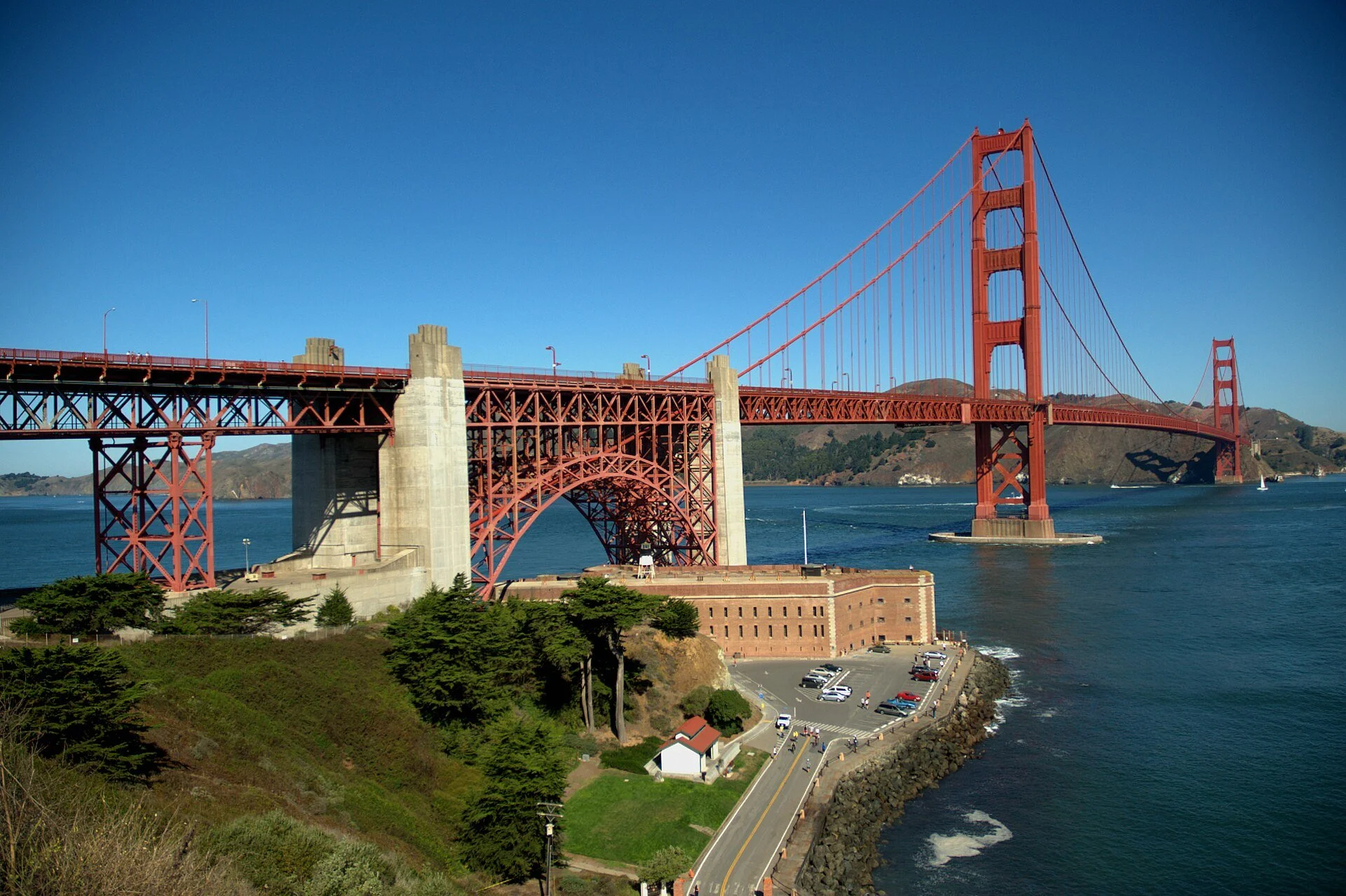
Image Credit: Guillaume Paumier, CC BY-SA 3.0 via Wikimedia Commons
The Landscape and Natural Environment
The Presidio's landscape is one of its most surprising and significant features. What might appear from a distance as a forested headland is in fact a largely constructed environment — the result of deliberate tree planting campaigns undertaken by the U.S. Army beginning in the 1880s, when the site was largely windswept sand dunes and coastal scrub.
Army engineers planted eucalyptus, Monterey pine, and Monterey cypress in massive numbers to stabilize the sandy soil, create windbreaks, and transform the barren headland into the forested landscape that San Francisco residents now experience as a natural given.
This reforestation history matters because it frames current conversations about the Presidio's ecological future. The non-native tree species planted during the Army era are aging and in many areas dying, creating openings that the Presidio Trust — the federal agency established by Congress in 1996 to manage the interior of the park — has used to restore native coastal scrub habitat that supports rare and endangered plant species found almost nowhere else in San Francisco.
The restoration of native habitat within an urban park of this density reflects a broader shift in how urban ecologists and park managers approach historically layered natural spaces in densely populated metropolitan areas.
San Francisco's climate shapes the Presidio's landscape and the experience of visiting it in specific ways. The city's Mediterranean climate — characterized by cool, foggy summers and mild, wet winters — creates a microclimate at the Presidio that is distinctly different from sunnier neighborhoods further inland.
According to NOAA climate data, San Francisco averages approximately 23 inches of annual precipitation, almost entirely between November and April.
The Presidio's exposed position at the peninsula's tip intensifies the afternoon fog and wind that characterize San Francisco summers, making it consistently cooler and more atmospheric than neighborhoods like the Mission District or Noe Valley just a few miles to the south.
Historic Architecture and Preservation
The Presidio contains one of the largest concentrations of historic military architecture in the United States — more than 700 historic structures spanning multiple centuries and architectural periods that document the site's evolution from Spanish fort to Cold War installation.
The Main Post, the historic heart of the former military base, contains Spanish Colonial Revival, Victorian, and Craftsman-era buildings arranged around a parade ground that preserves the spatial logic of military camp organization that has shaped the site since its founding.
The Presidio Trust has converted many of these historic structures into residential units, office space, hotels, and cultural facilities — an adaptive reuse approach that has made the Presidio financially self-sustaining without federal appropriations, a unique status among units of the national park system.
This economic model was built into the Presidio Trust Act of 1996, which required the park to achieve financial self-sufficiency by 2013. The Presidio Trust manages this portfolio while maintaining preservation standards consistent with the Secretary of the Interior's Standards for Rehabilitation — the federal guidelines that govern how historic structures may be modified while retaining their eligibility for historic preservation recognition.
The Inn at the Presidio, a boutique hotel occupying a former Army officers' barracks, and the mix of residential, cultural, hospitality, and office uses within historic structures represent a model of sustainable historic site stewardship that has attracted international attention from urban planners and park managers.
The Presidio's approach to adaptive reuse shares the same philosophy of thoughtful historic stewardship visible in other San Francisco green spaces — Golden Gate Park to the south similarly balances public recreation, ecological restoration, and cultural programming within a landscape that has been shaped by successive generations of civic investment.
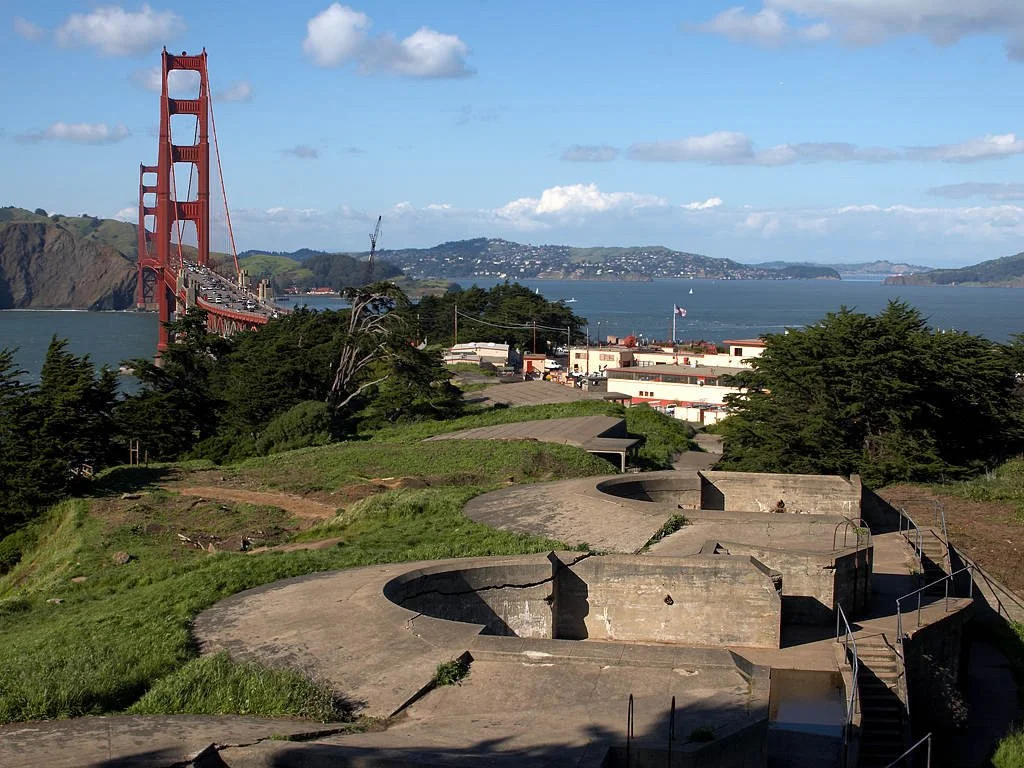
Image Credit: Jon Sullivan, Public Domain, via Wikimedia Commons
The Presidio and San Francisco's Wellbeing Landscape
The Presidio's role in San Francisco's public health and community wellbeing landscape extends well beyond its function as a recreational amenity. Research consistently demonstrates that access to natural environments within urban settings produces measurable benefits for mental health, stress reduction, and community cohesion — outcomes that are particularly significant in a city as densely populated and economically pressured as San Francisco.
The American Public Health Association has documented the relationship between urban green space access and population health outcomes, reinforcing what generations of San Francisco residents have experienced intuitively — that places like the Presidio provide restoration and perspective that the city's built environment cannot.
For residents of Noe Valley and the broader San Francisco peninsula, the Presidio offers an accessible counterpoint to urban density — forested trails, coastal bluffs, historic buildings, and views across the Golden Gate that reconnect visitors to the natural and historical scale of the place they inhabit.
The walk from Crissy Field along the waterfront to the base of the Golden Gate Bridge, the forest trails through the Tennessee Hollow watershed restoration area, and the quiet of the Main Post's historic parade ground all offer the kind of restorative experience that mental health researchers increasingly recognize as essential to urban wellbeing.
Residents exploring the full range of natural and cultural resources that define San Francisco, California will find the Presidio among the city's most layered and rewarding destinations — a place where history, ecology, and public space converge at one of the most dramatic geographic settings on the American coast.