The Mission District: Culture, History, and Change
The Mission District doesn’t just have culture—it broadcasts it. On any given day, you can hear multiple languages in a single block, smell tortillas and roasted coffee drifting out of corner storefronts, and spot a fresh layer of paint brightening a long-loved mural. For visitors, the Mission can feel like a vivid postcard of San Francisco. For locals, it’s something more intimate: a living neighborhood where identity is made and remade in public—on walls, sidewalks, park lawns, and in the way people show up for one another.
That sense of “public life” is part of what makes the Mission so magnetic. It’s also why the neighborhood’s changes—some hopeful, some painful—are felt so deeply.
A neighborhood anchored by deep roots
One of the clearest reminders that the Mission’s story reaches far back is Misión San Francisco de Asís, commonly known as Mission Dolores. Founded in 1776, it remains closely tied to the earliest colonial history of San Francisco, and it’s often described as the city’s oldest intact building. That longevity matters—not as a museum label, but as a real anchor point. In a city that rebuilds constantly, the Mission has a way of keeping its timeline visible.
Nearby, Dolores Street and the surrounding blocks hold layers of community history—religious, civic, and cultural—that continue to shape the neighborhood’s rhythm today. Even if you arrive for the food or nightlife, the Mission’s oldest landmarks subtly suggest a deeper theme: this is a place where generations have continually negotiated what “home” means.
Murals as memory, protest, and belonging
If the Mission has an open-air library, it’s the walls.
Balmy Alley is famous for its dense concentration of murals and for the way its art has carried political and human rights messages across decades. The alley’s mural tradition grew in the mid-1980s, emerging as a creative response to crises and injustices beyond San Francisco, and it continues to evolve—documenting everything from global solidarity to local displacement and housing struggles.
A short walk away, Clarion Alley offers a different—but related—kind of visual conversation. The Clarion Alley Mural Project (CAMP) has long framed public art as a vehicle for social storytelling and community voice, with murals that can be playful, fierce, grieving, celebratory, or all at once. It’s not “art as decoration.” It’s art as neighborhood dialogue—often created in direct response to what residents are living through right now.
For a business building local-area expertise, murals are also a practical doorway into place-based writing: you can describe where art clusters, how to view it respectfully, and how it connects to the Mission’s broader history—without reducing the neighborhood to a trend.
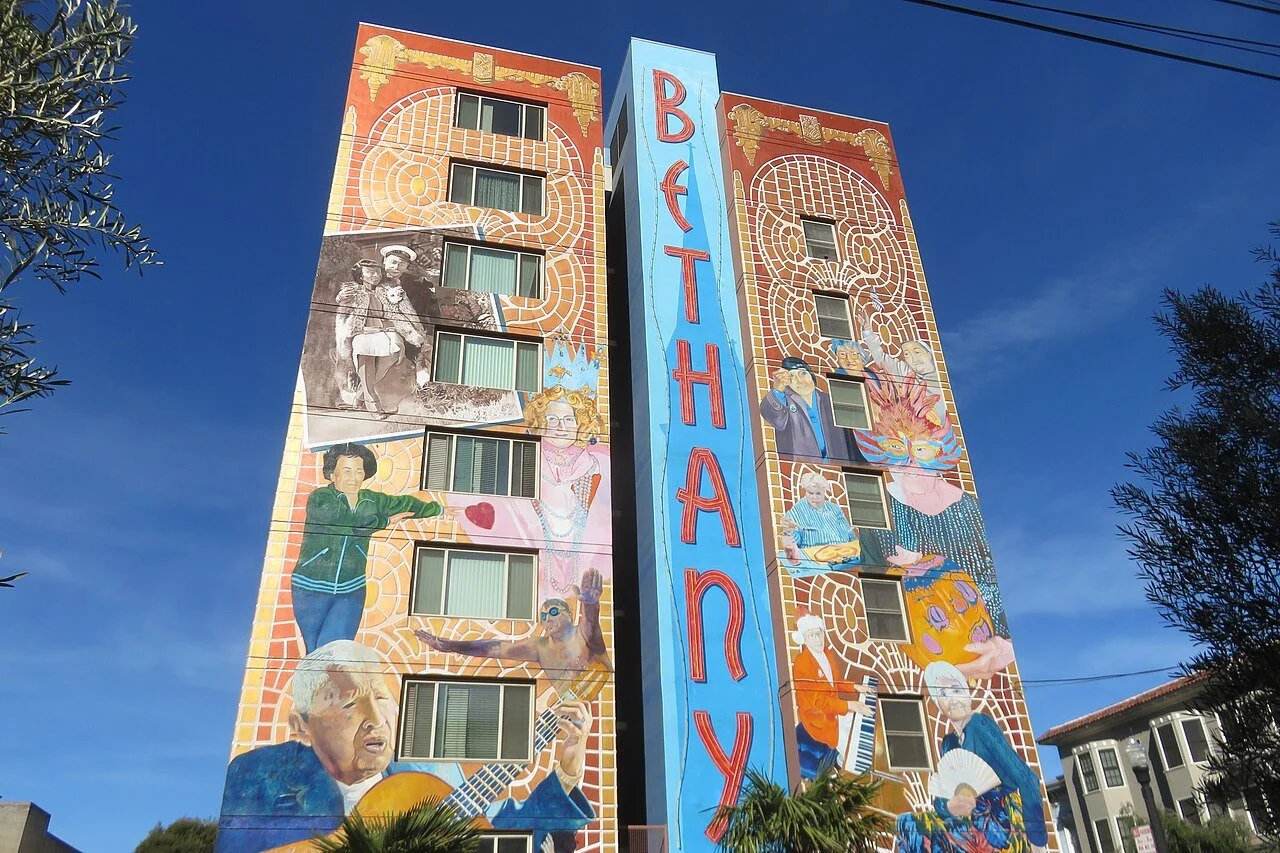
Image credit: Fabrice Florin, CC BY-SA 2.0, via Wikimedia Commons
Calle 24 and the cultural heartbeat of 24th Street
To understand what the Mission protects, start on 24th Street.
The Calle 24 Latino Cultural District was established to preserve and celebrate Latino heritage, culture, small businesses, and community institutions in the corridor—especially in the face of displacement pressure. It’s a cultural district with a very grounded purpose: protecting the everyday ecosystem that makes a neighborhood feel like itself (grocers, bakeries, taquerías, bookstores, community arts).
If you want a structured way to experience this corridor, the City’s Legacy Business “walk” is a useful guide to long-running local spots and the stories behind them. Beyond being a fun itinerary, it’s a reminder that “culture” isn’t abstract—it’s often held together by small businesses and intergenerational routines.
Change, pressure, and the question of who gets to stay
The Mission’s popularity has brought energy and investment, but it has also intensified long-running tension around housing costs and displacement. Over the past several decades—especially during tech booms—debates about development, affordability, and neighborhood identity have been unusually visible here. People aren’t arguing about hypothetical futures; they’re responding to real rent hikes, shifting storefronts, and the loss of neighbors and family networks.
That’s one reason official planning efforts in the Mission often emphasize stabilization and community protection alongside growth. The City’s Mission Action Plan 2030 (MAP2030) continues that thread, explicitly positioning the Mission as a place where planning is not just about buildings, but about keeping communities intact. Whether or not every resident agrees with every strategy, the existence of a dedicated action plan signals how central the Mission is to San Francisco’s equity and housing conversation.
Holding the “integral” view: culture, nervous systems, and neighborhood wellness
For those of us drawn to holistic and integrative ways of living, the Mission offers a useful lesson: well-being is not only individual—it’s environmental and cultural.
You can feel this in small moments: friends meeting in a park after work, elders chatting outside a market, a community mural that makes passersby pause and reflect. These are not spa-day versions of wellness. They’re the subtle stabilizers that help people regulate stress and feel connected—especially in cities where pace and pressure run high.
If you practice mindfulness, breathwork, or other grounding techniques, consider bringing them into your neighborhood routine in a respectful, place-based way: a slow walk past murals (not as a photoshoot, but as a listening practice), a few quiet minutes in a green space before errands, or supporting a legacy small business as an act of community care.
The Mission has always been a place where private life spills into public life. In that sense, it naturally invites an “integral” view: mind, body, culture, and community—all in the same frame.
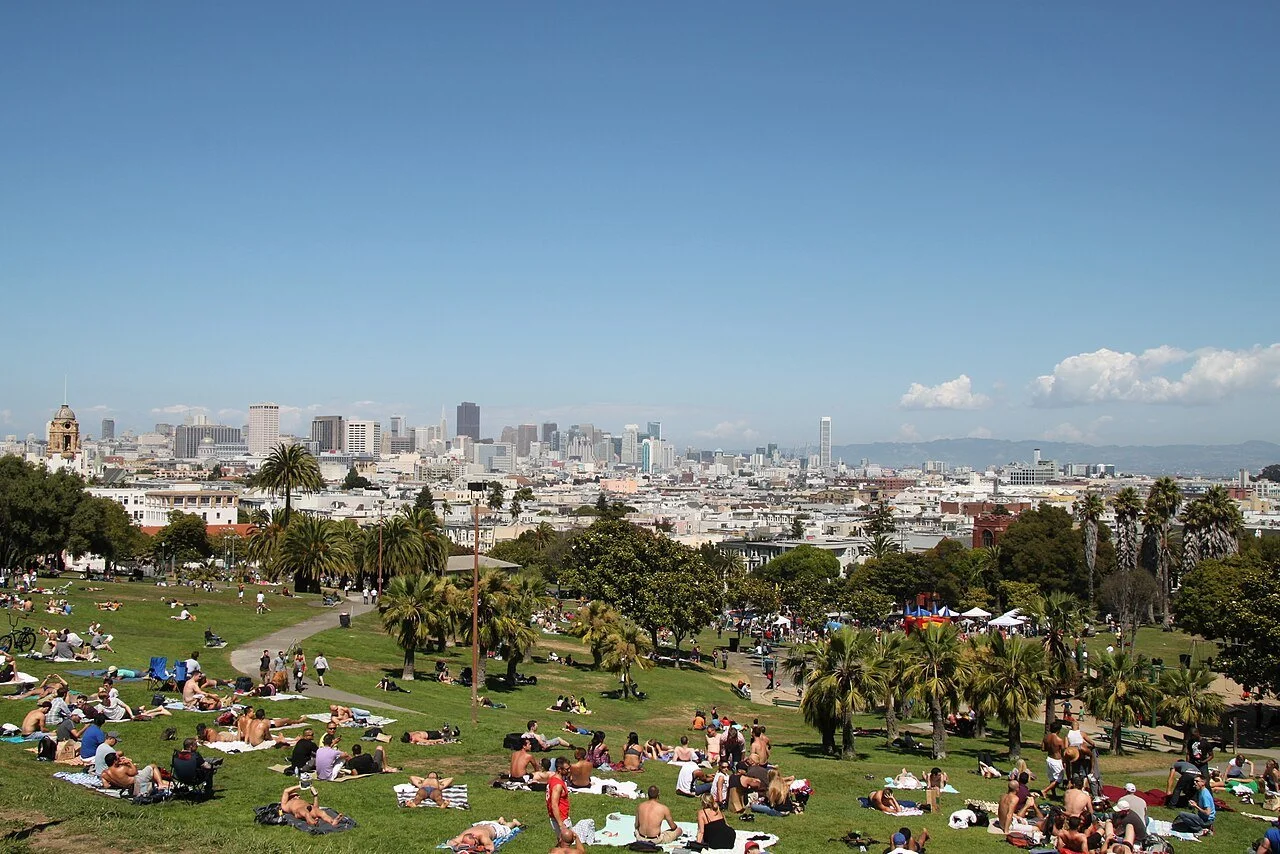
Image credit: Tim Bartel from Cologne, Germany, CC BY-SA 2.0, via Wikimedia Commons
Visiting (or re-seeing) the Mission with care
If you’re spending time in the Mission—whether as a visitor or a longtime San Franciscan—here are a few ways to engage thoughtfully:
Treat murals like community artifacts, not just backdrops. Read artist statements when available, and remember that these works often speak to lived struggle.
Spend along 24th Street with intention. Cultural districts survive when everyday businesses do.
Learn one “history anchor” (like Mission Dolores) so the neighborhood isn’t flattened into a single era or trend.
Notice the change without romanticizing it. The Mission is not “before” or “after”—it’s a constant negotiation.
The Mission District’s defining trait may be that it refuses to be simplified. It’s old and new, tender and loud, celebratory and grieving—sometimes on the same block. And while change is unavoidable in San Francisco,CA the Mission continues to show what it looks like when a neighborhood actively fights to keep its story visible.